Practical Strategies To Help
Visual Reminders: Kids who struggle with ADHD tend to do better with visual direction rather than having lots of verbal direction and commands coming at them. You can consider using a visual checklist with pictures (not words) to help them remember tasks that are difficult to remember.
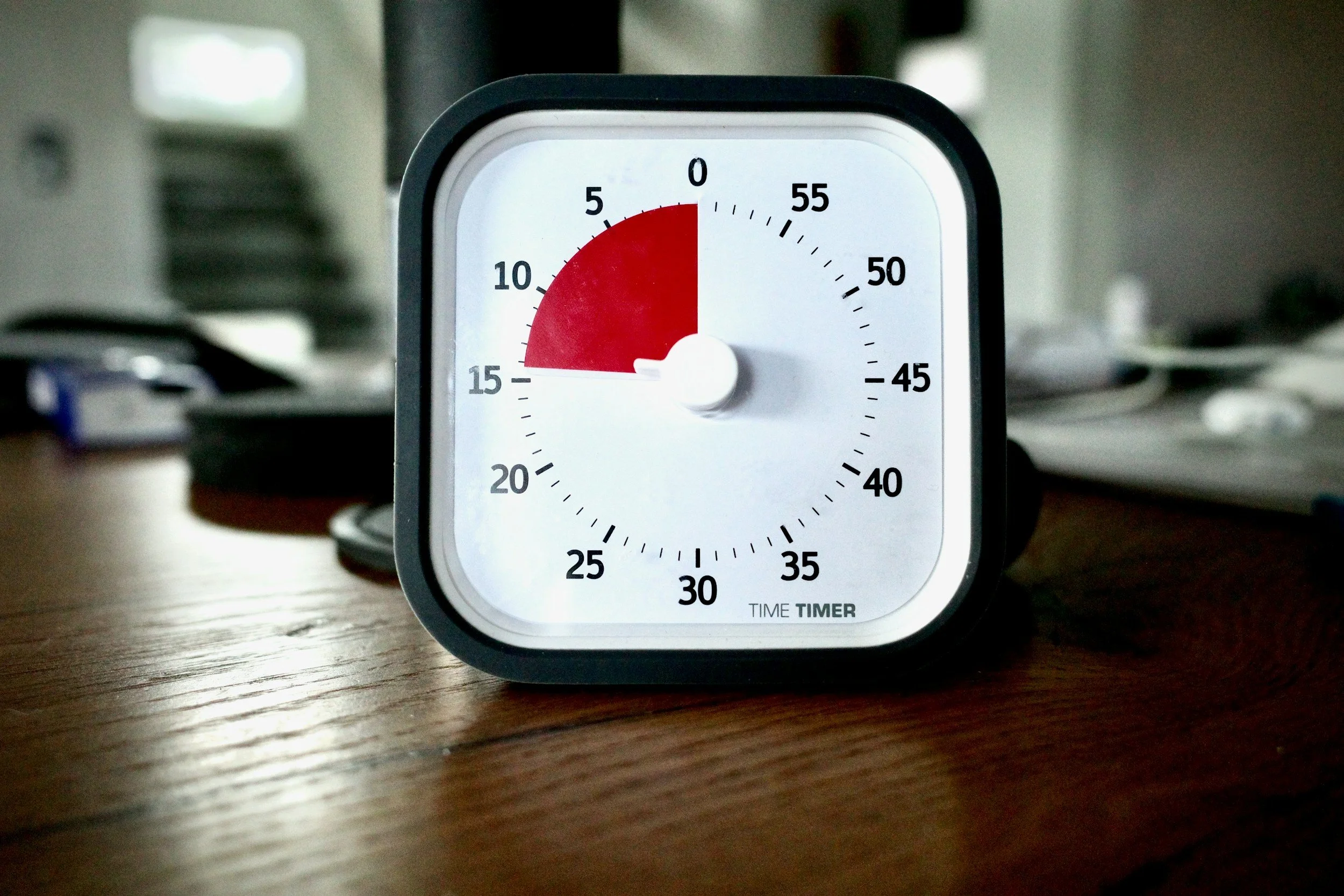
Visual timer: Get out the old kitchen timer! The one that winds up, not the digital one. Being able to see a set amount of time concretely rather than numbers on a clock can help your brain understand time much better.
Launch Pad: Put daily or weekly used items in an easy to access place and practice always putting the items back in it’s place. Try putting bookbags, keys, coats etc. on the same hook every day and shoes in the same spot every day.
-Practice, Practice, Practice: Don’t expect them to do it all at once! Break multi step tasks into smaller 2 step tasks. Practice those 2 steps over and over for a week before adding on more steps to the process. For example, when your child comes home from school walk with them and narrate - “First, hang the book bag on this hook. Second, shoes go on this shelf”. Do this for one week and then add on the third step “Third, put lunch box on kitchen counter” and practice these three steps for another week. This repetition and intentional adding on of steps helps build muscle memory solidify the skill with practice.
Realistic Expectations for Focusing
As a general rule of thumb, the average length of time a child is able to focus on a specific task is about 2-3 minutes per age. Expecting a kindergartener to sit for 30 minutes is likely an unreasonable expectation for most kids this age.
Keep in mind these are skills can be improved with PRACTICE, REPETITION AND CONSISTENCY!
Executive Functioning
The part of your brain called the Prefrontal Cortex is responsible for the “higher level mental processes” such as executive functioning skills. Executive Functioning includes planning, focusing, initiating a task, organizing, problem-solving, judgement, reasoning and emotion regulation. These are considered higher level because we aren’t just born with these skills. They require practice and a long time to develop and master. Not surprisingly, the Prefrontal Cortex is the last part of a human’s brain to reach full maturity. This part of the brain will finish fully developing around the age of 25!
Some kids may have a natural tendency toward organization, planning and understanding emotions. Other kids may find it more challenging to develop these skills since it is not in their nature or they inherited these challenges through genetics.
Difficulty with these executive function skills is linked to Attention Deficient Hyperactivity Disorder (ADHD) - especially the inattentive or combined type. Not all people who struggle in this area have ADHD and you should talk to your doctor or your child’s doctor to discuss this further.