

Sleep and Mental Health
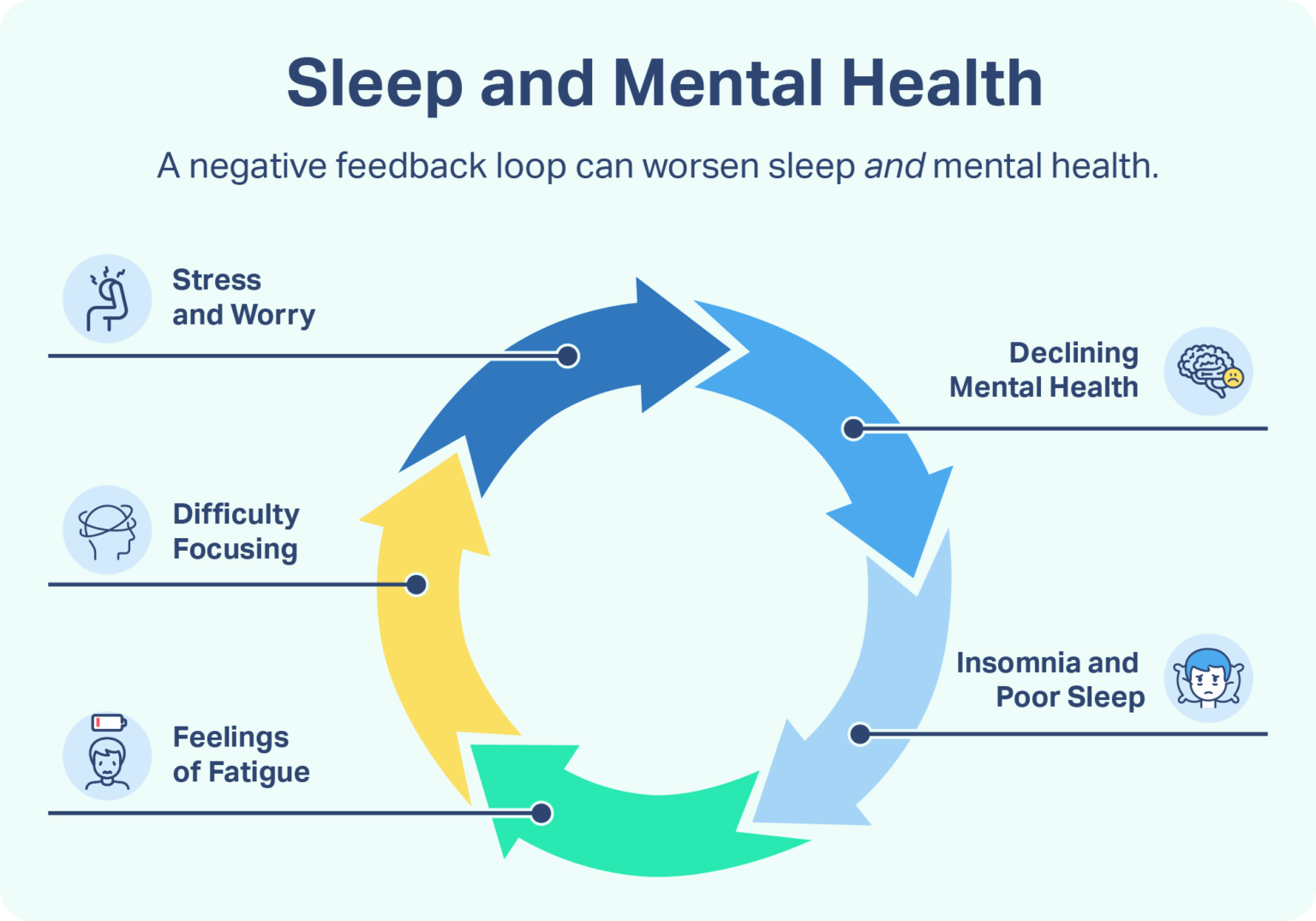
Source: www.sleepfoundation.org
It helps to follow nature’s cycle, as this is how your circadian rhythm is designed to function. Going to bed by 10:00 p.m. and waking between 6:00 and 7:00 a.m. is ideal, as it allows your body to align with its natural circadian rhythm, which is regulated by your eyes' exposure to light.
If you’re having trouble resetting your sleep rhythm, try going outside or sitting near a sunny window for 10–15 minutes within an hour of waking. Doing this consistently helps your brain regulate the release of the sleep hormone, melatonin, later in the evening, signaling to your body that it is time to sleep. Avoiding electronics that emit artificial light for at least 1–2 hours before bedtime is also essential.
And remember, consistency is key. It may take anywhere from 1–3 weeks of following a regular sleep schedule and practicing good sleep hygiene before your body settles back into a healthy sleep rhythm. Sweet dreams!
Poor sleep is a symptom that is often reported when someone is experiencing mental health difficulties such as depression and anxiety. However, it’s not only that mood and anxiety symptoms affect your sleep—the opposite is also true. Your sleep has an effect on your mind and emotions as well. Deviating from your natural circadian rhythm can greatly affect the way your brain releases important hormones and neurotransmitters that are closely linked to how you feel.
So why are the quantity, quality, and timing of sleep so important? Sleep is the time when your body and mind repair and recharge. Your mind is working all day long—planning, thinking, organizing, making decisions, processing sensory input, switching between tasks, and managing emotions. While you sleep, your mind finally has the chance to slow down and process memories, emotions, and information. Sleep is an essential restorative activity for both your brain and body.
Consider using these sleep hygiene tips to help you get the right amount of sleep so that it feels refreshing and restorative:
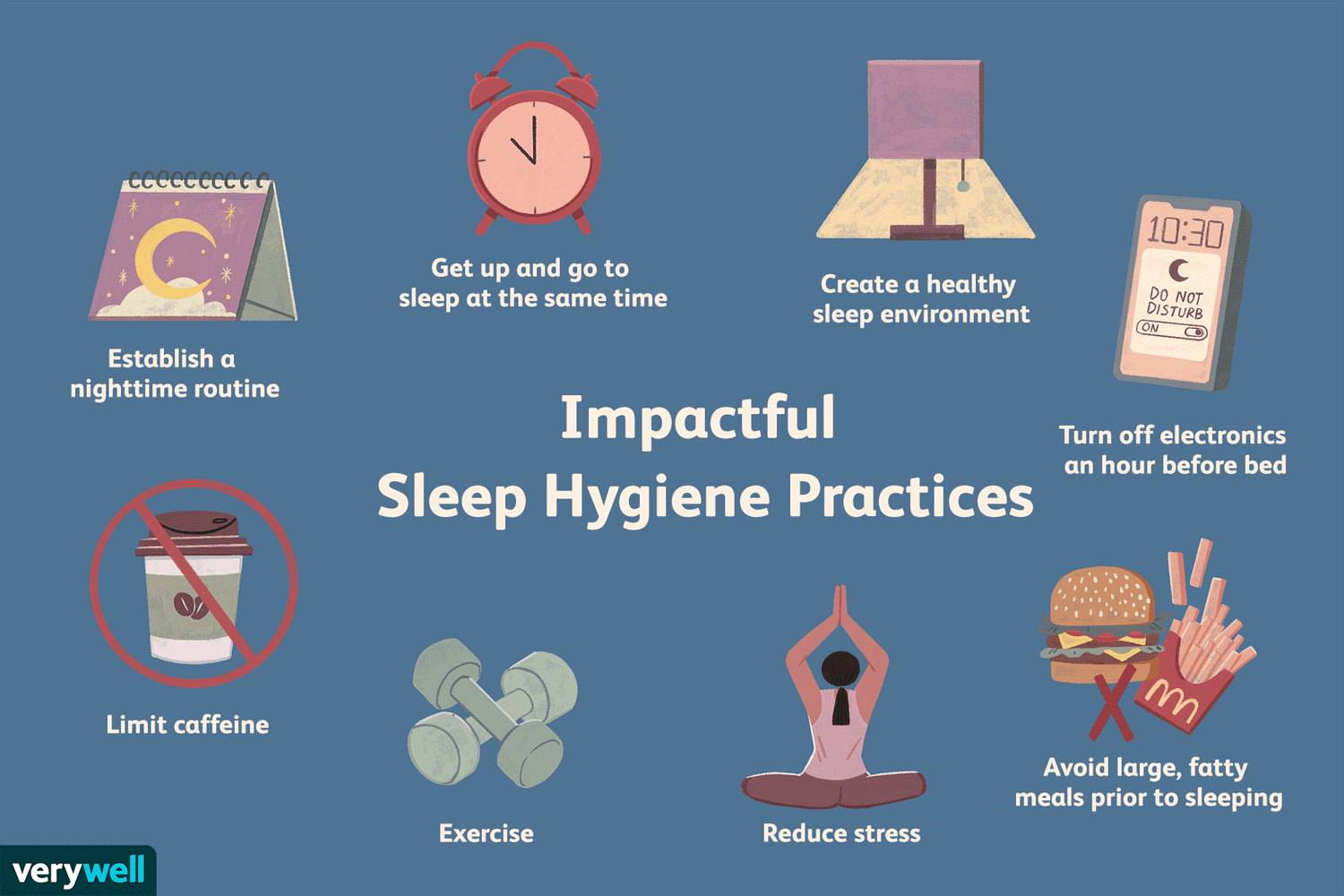
Source: www.verywellmind.com (What is Sleep Hygiene)