

Week 2
Each week, take a little time to put what you’ve learned into practice as a family. These simple activities are designed to help you connect, reflect, and build skills you can use together in everyday moments.
Family Calm Corner + Guided Reset Routine
What You’ll Need
✅ A small, low-traffic spot in your home — a cushion, rug, or blanket in a quiet area is enough
✅ Two or three simple sensory items your family finds calming, such as something soft to hold, putty, a stress ball, or a fidget toy
✅ Optional calming supports, such as noise-cancelling headphones or a small speaker for music
✅ A few minutes to set up the space together and introduce how it can be used
How It Works
Step 1: Create a Calm Space
Pick one small spot in your home and stock it with two or three sensory tools your family already responds well to. This isn’t a time-out. Introduce it as a space anyone in the family can choose to use when they need a moment to pause, settle, or work through a big feeling. The goal is for it to feel supportive and inviting, not like a place someone is sent for having a hard time.
Step 2: Practice the Breathing Exercise (Before You Need It)
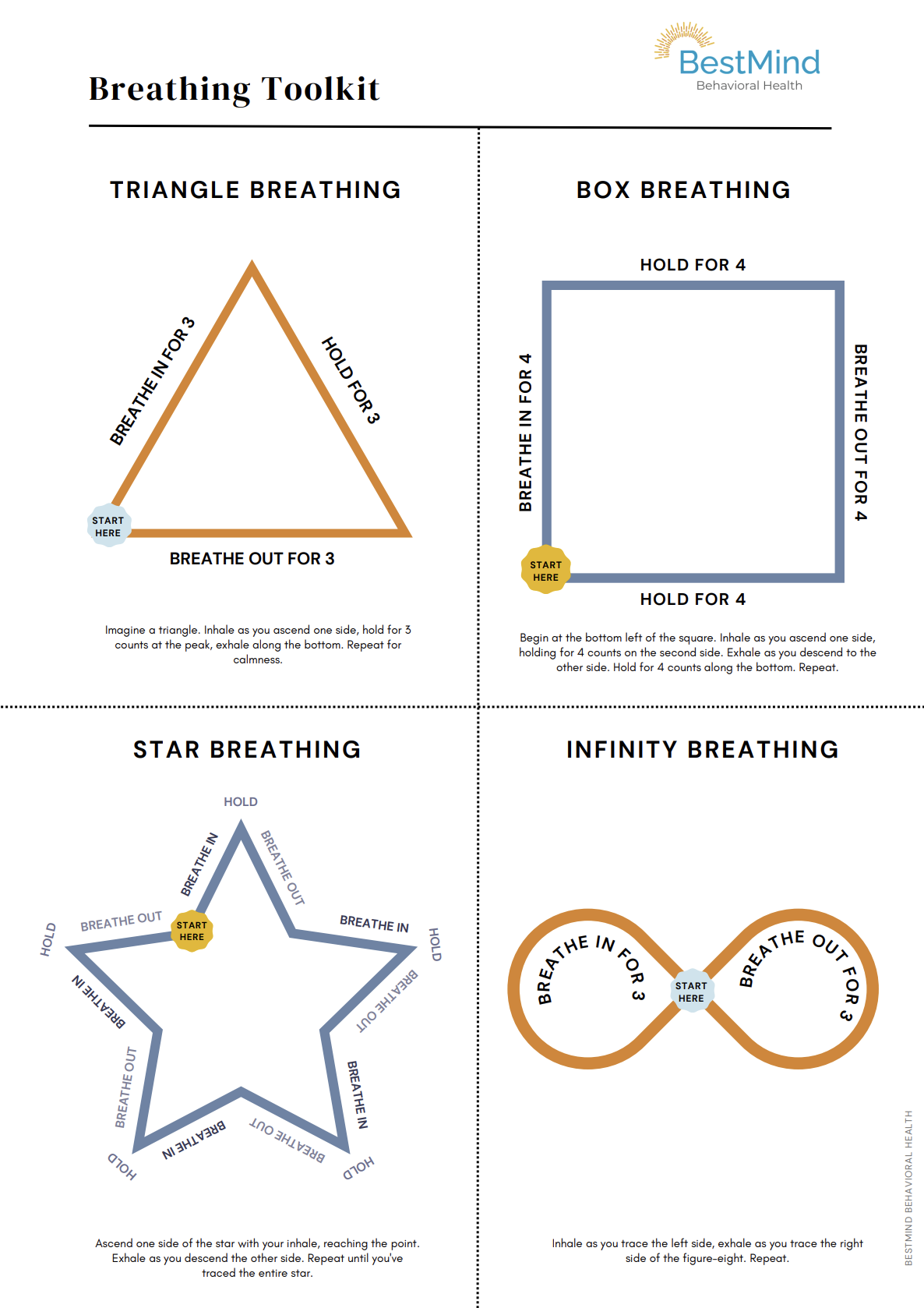
Try box breathing as a family when everyone is calm: breathe in for 4 counts, hold for 4, breathe out for 4, and hold for 4. Repeat four times. Practicing during a calm moment helps make the pattern familiar, so it’s easier to return to when stress starts to build.
Use the visual below to guide your practice or explore a few other breathing exercises together. Different strategies may work better for different people, so encourage each family member to find one that feels comfortable and helpful.
Step 3: Use the Tools When Stress Shows Up
When someone in the family notices stress starting to build, encourage them to use whichever tool feels helpful in the moment. That might mean spending a few minutes in the calm space, reaching for a sensory tool, or practicing a breathing exercise. Kids and adults can use the space without having to explain or justify why they need it.
Step 4: Make Room for Movement or Music
Calm doesn’t always come from sitting still. For some people, movement or music can be a more helpful way to work through stress. Try stretching, putting on a favorite song, or moving around together. Give family members the freedom to notice what works best for their bodies.
Tips for Success
Introduce the calm space when everyone is feeling settled so it’s familiar before a stressful moment arises.
Model using the tools yourself. Let your kids see you pause, breathe, move, or take a moment when you need one.
Keep it low-pressure. There’s no single “right” way to use the space or tools, and no required amount of time to spend there.
Remember that different strategies may work at different times. What helps one family member—or even the same person on a different day—may vary.
Ready to give it a try?
These resources can help your family practice calming strategies together. Use the Breathing Toolkit as a visual guide for box breathing or explore some of the other breathing exercises to find what feels comfortable for your family. Then, watch the Family Breathing Exercise video for another way to practice slowing down and breathing together.
You don’t need to use every strategy or follow them exactly. Try a few, notice what works best for each family member, and return to the ones that feel most helpful.
Credit: @UnwindMoon
For more of their content, click here!