Week 3: Move & Play
This week we will learn about movement in everyday life —how we play, move, and connect through our bodies in simple, natural ways. Children often move without thinking about it, and adults already weave movement into the day more than we sometimes realize. A walk to the car, dancing in the kitchen, playing at the park all count.
This week is about noticing those moments more intentionally and exploring different ways movement can feel good, supportive, and fun for the whole family.
What Does It Mean To Move Our Bodies?
Our bodies are designed to move throughout the day.
Movement can support:
Energy and alertness
Mood and emotional balance
Focus and learning
Sleep and recovery
Strength, coordination, and growth
Movement can happen in short bursts or longer stretches, in structured activities or spontaneous play. Many daily routines already include movement without it always being noticed. This week is simply about paying a little more attention to how movement shows up and how it feels.
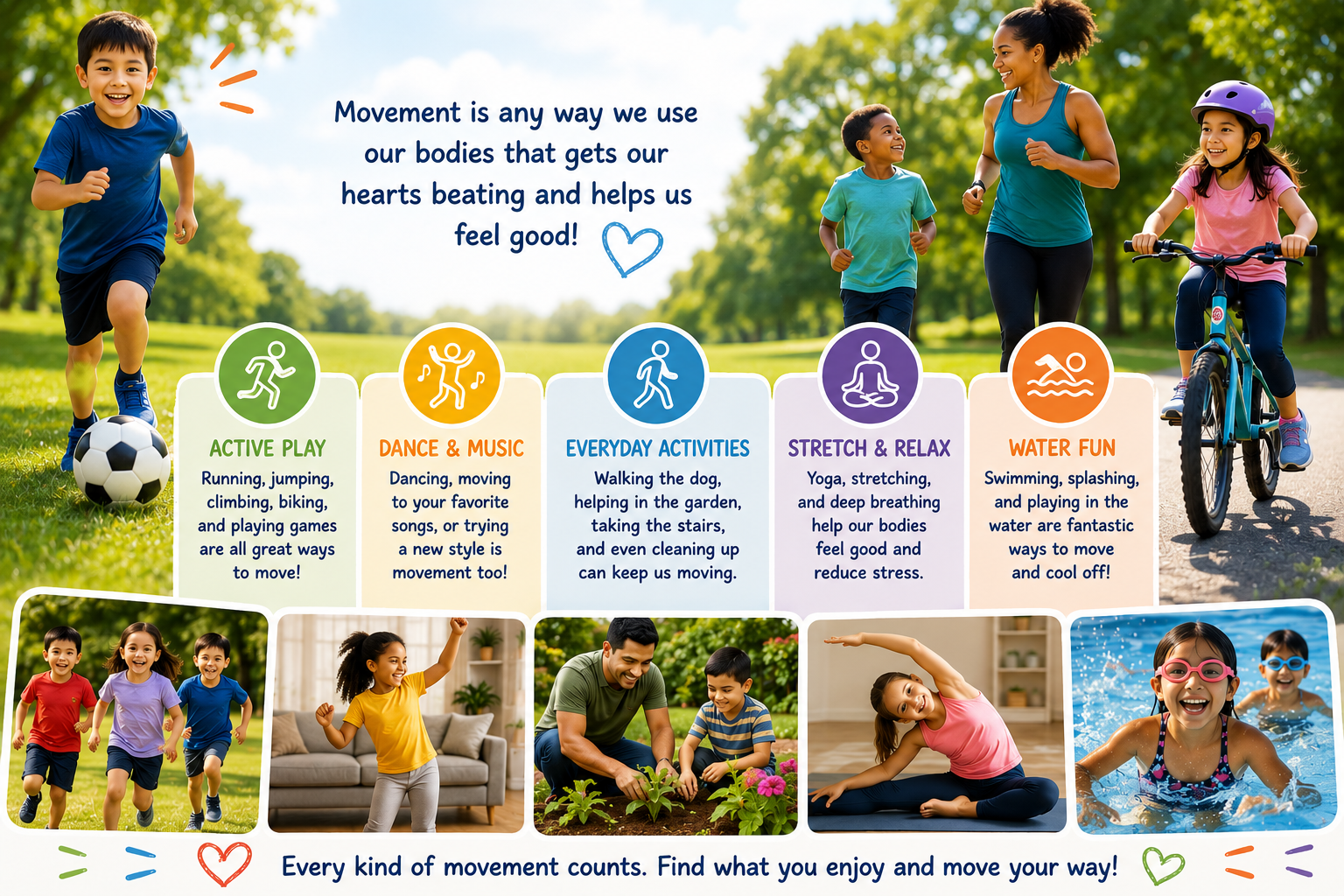
How Movement Supports Mood, Energy & Growth
Most people can feel a difference in their body after moving, even in small ways. Sometimes energy feels higher, the mind feels clearer, or stress feels a little lighter.
For kids, movement is often part of how they process emotions and release energy. For adults, it can be a way to reset during a busy or stressful day without needing much time or planning.
Movement can help with:
Feeling more steady and balanced during the day
Supporting focus when attention feels scattered
Improving sleep and rest at night
Helping the body feel less tense or restless
Creating small emotional “resets” during the day
Even a few minutes here and there can add up in meaningful ways.
A simple thing to try this week is noticing:
“How do I feel before I move, and how do I feel after?
Many Ways To Move Throughout The Day
Movement doesn’t have to follow a formal routine or look a certain way. It can show up in playful, creative, gentle, or everyday moments.
Some examples families might already be doing:
Playing outside, running, or chasing games
Walking together after meals or in the evening
Dancing in the kitchen while cooking or cleaning
Riding bikes, swimming, or going to the park
Stretching, doing yoga, or taking quiet movement breaks
You might also try small ideas like:
Putting on one or two songs and having a quick dance break
Turning a hallway or living room into a mini obstacle course
Taking a family walk where each person picks part of the route
Pausing for a 2–3 minute movement break between activities or screens
The goal is to try a few different kinds of movement and notice what feels enjoyable or easy to come back to.
Movement as Family Connection
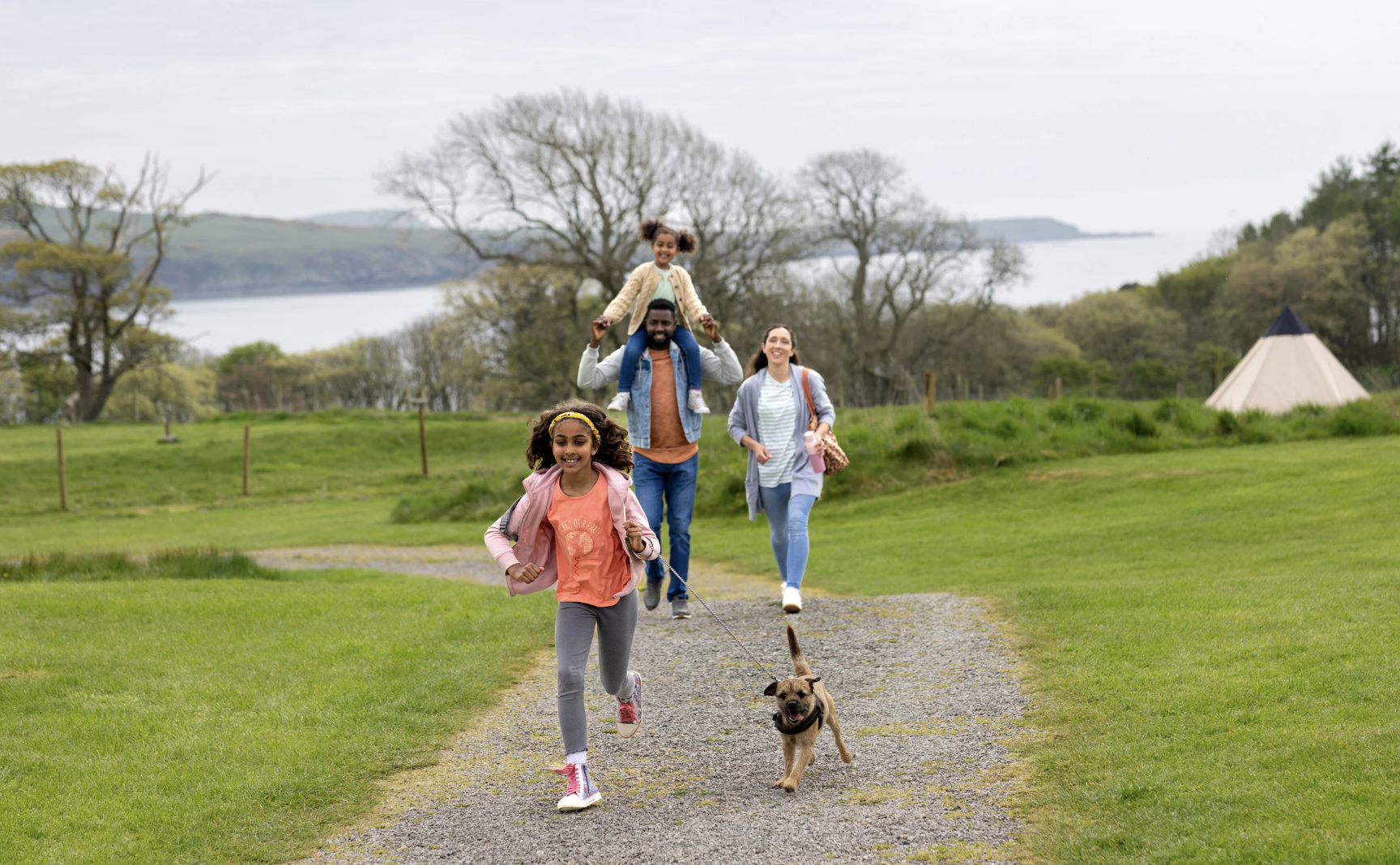
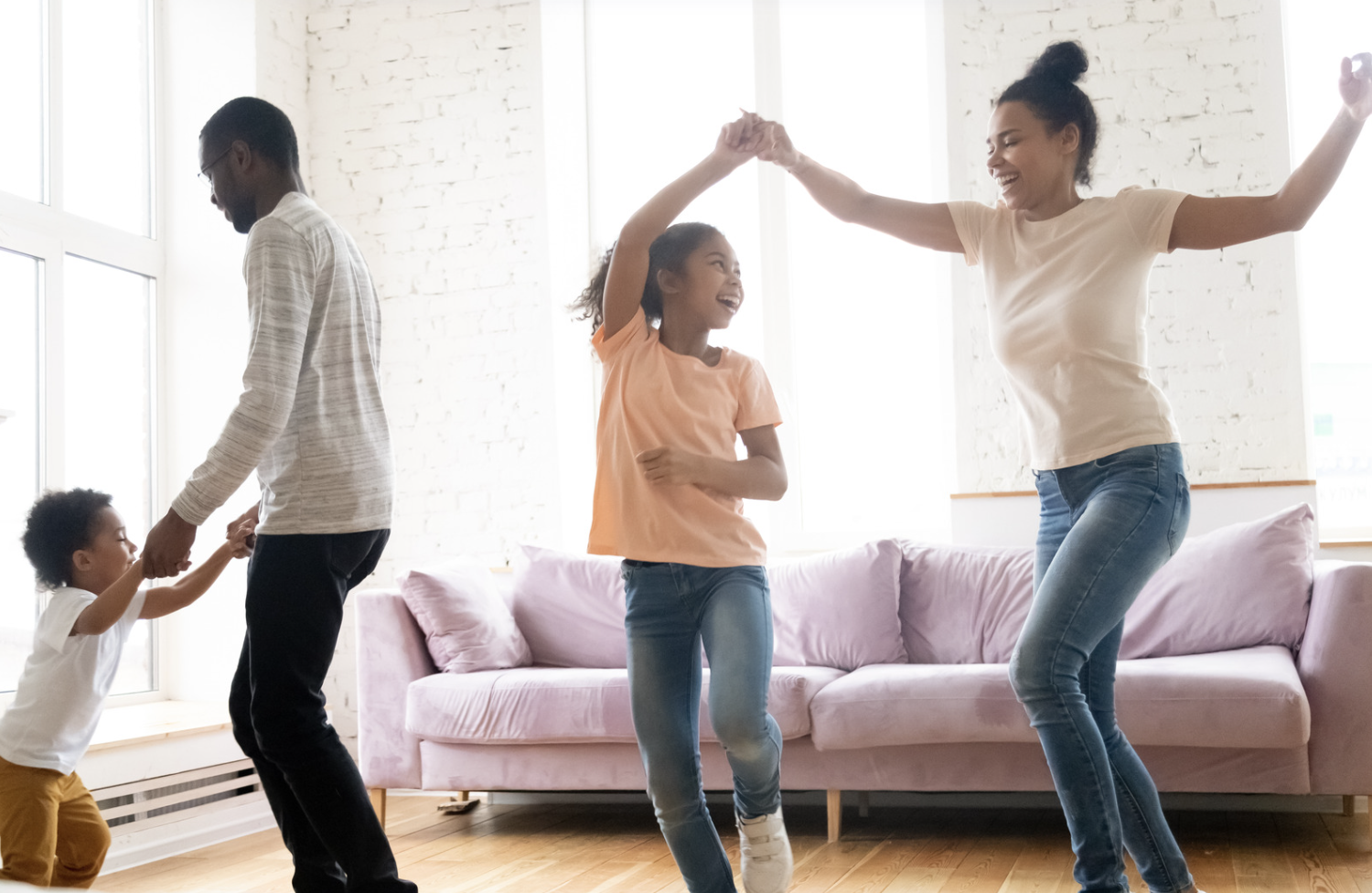
Some of the most natural moments of connection happen while moving together. It might be laughing during a game, walking side by side, or dancing around the kitchen while dinner is being made.
These moments don’t need to be planned or long to matter. Even a short shared activity can feel meaningful.
Families might notice connection during:
Outdoor play or games together
Evening walks or park visits
Cooking or cleaning with music and movement
Weekend outings that involve being active together
It’s often in these simple shared moments that kids feel most connected and seen.
Noticing How the Body Feels
Our bodies are always giving feedback—it just takes a little practice to notice it.
After movement, you might notice things like feeling more awake, calmer, more focused, or sometimes simply tired in a way that feels like rest is needed.
Children especially may need help naming what they feel, and adults can model that by sharing their own observations out loud.
Some gentle questions to explore together:
How does my body feel right now?
Did anything change after we moved?
Does this movement feel energizing, calming, or tiring?
There’s no expected answer, just curiosity.
Family Reflection
As you move through the week, here are a few things to reflect on together:
What kinds of movement did we enjoy most?
When did movement feel easiest to include in our day?
Did we notice any changes in mood, energy, or focus after moving?
Which moments helped us feel most connected?
What would we like to do again together?
There is no single "right" way to stay active. The best movement is the movement your family enjoys and looks forward to doing together. Keep exploring, keep playing, and keep finding opportunities to move in ways that help your family feel healthy, connected, and energized.