Week 5: Strong Minds, Strong Hearts
Every family experiences big emotions, stressful moments, and challenges from time to time. Learning how to recognize our feelings, care for our bodies, and respond with healthy coping strategies helps children and adults build resilience together.
This week, we'll explore how our emotions and physical well-being are connected. We'll practice noticing what our bodies are telling us, learn simple ways to manage stress, and discover how encouragement, patience, and self-compassion help us continue growing through life's challenges.
Stress & Emotions
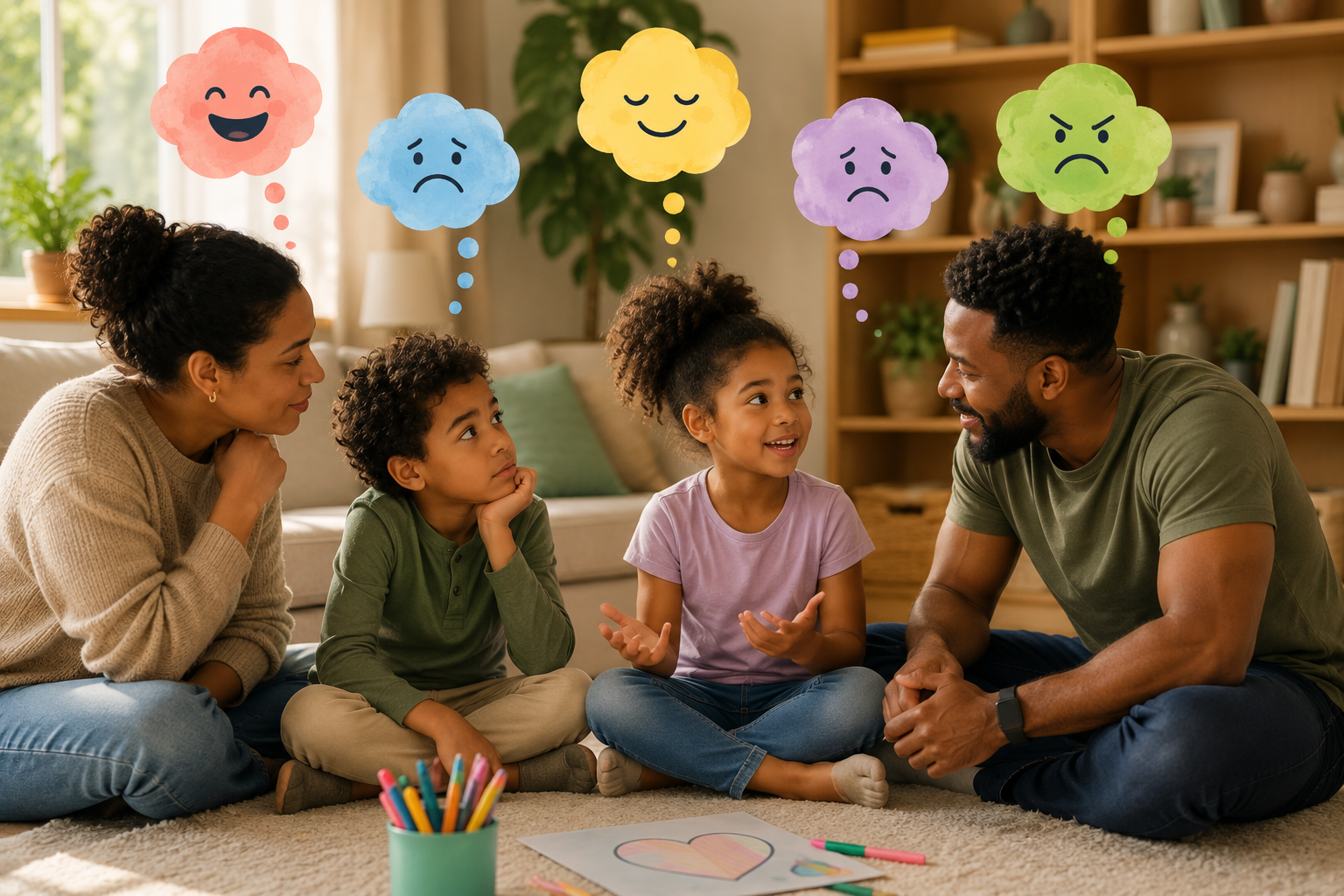
Emotions are a normal part of everyday life. Happiness, excitement, frustration, disappointment, worry, and sadness all provide important information about how we're feeling and what we may need. Learning to recognize emotions helps children and adults respond thoughtfully instead of reacting automatically.
Stress is also a natural part of life. Some stress can help us prepare for new experiences or solve problems, while ongoing or overwhelming stress can make it harder to think clearly, sleep well, or enjoy everyday activities. Building healthy coping skills helps families navigate both everyday challenges and bigger life events.
One of the most helpful things families can do is create an environment where everyone feels comfortable talking about their feelings. Naming emotions, listening without judgment, and supporting one another helps children learn that all feelings are welcome—even when they are difficult.
Healthy ways to respond to stress and emotions may include:
Talking with someone you trust
Taking slow, deep breaths
Going for a walk or moving your body
Drawing, writing, or listening to music
Taking a quiet break before returning to a situation
Body Awareness
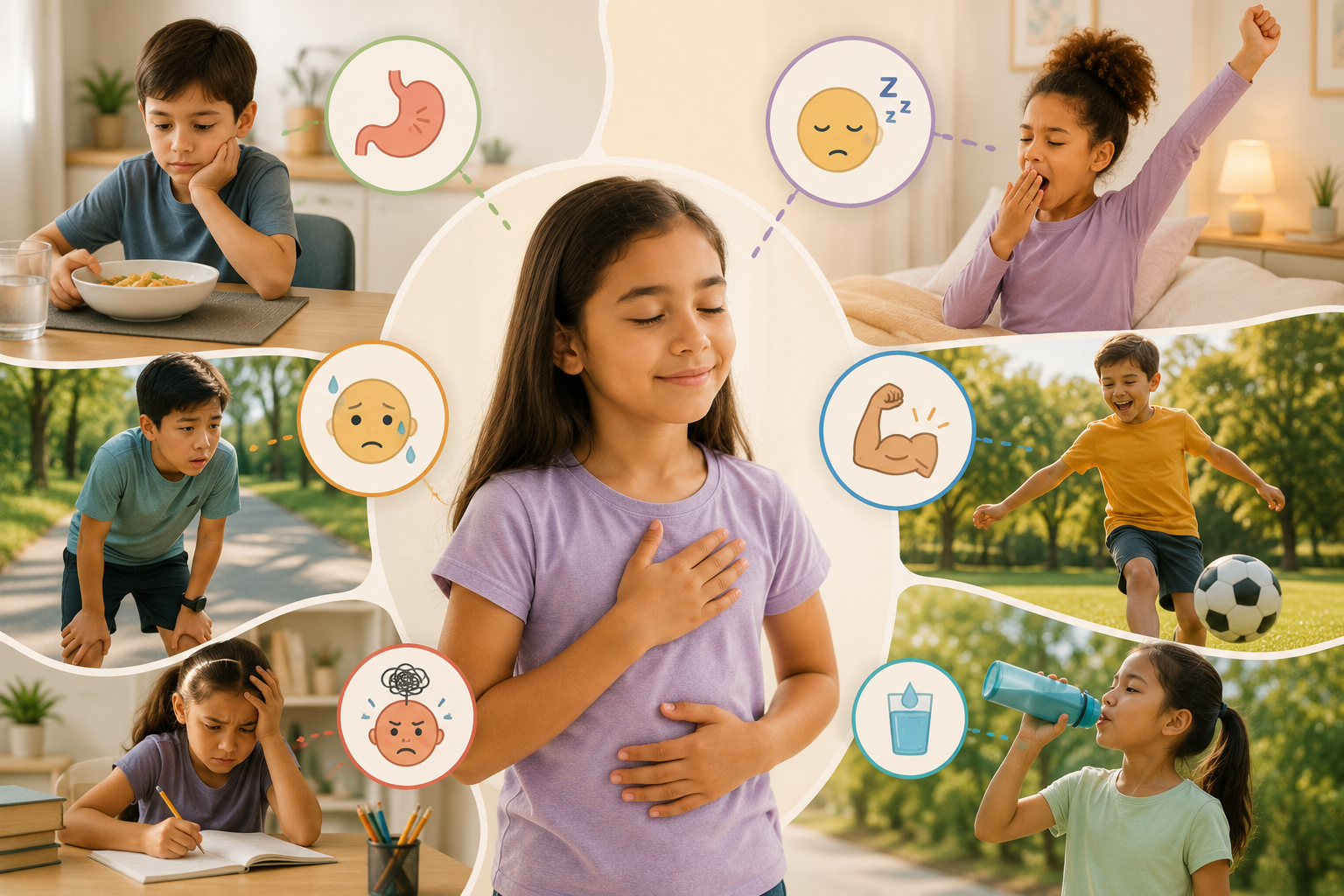
Our bodies are constantly giving us helpful information. Learning to notice these signals can help us understand what we need throughout the day.
Sometimes our stomach growls because we're hungry. We may yawn when we're tired, feel energized after moving our bodies, or notice tense shoulders when we're feeling stressed. Paying attention to these signals helps us respond with care instead of waiting until we're overwhelmed.
Children especially benefit from learning to connect physical sensations with emotions. For example, butterflies in the stomach may happen before trying something new, a racing heart might appear during excitement or nervousness, and tight muscles can be a sign that it's time to slow down and relax.
Encourage your family to pause throughout the day and ask:
How does my body feel right now?
What might my body be trying to tell me?
What do I need at this moment?
Developing body awareness helps children and adults make thoughtful choices that support their physical and emotional well-being.
Confidence & Resilience
Confidence grows over time through learning, practicing, and trying again. Every new experience—even the difficult ones—helps children and adults develop skills that prepare them for future challenges.
Resilience means continuing to move forward when something doesn't go as planned. Families build resilience by encouraging one another, celebrating progress, learning from mistakes, and remembering that growth happens one step at a time.
When children see adults respond calmly to setbacks and keep trying, they learn that challenges are a normal part of learning.
Ways families can encourage resilience:
Celebrating effort and persistence
Trying a new strategy when something feels difficult
Using kind and encouraging words with ourselves and others
Asking for help when we need it
Remembering that learning takes time

Family Reflection
As your family practices caring for both your bodies and your minds this week, take a few moments to reflect together:
What emotions did we experience this week, and how did we respond to them?
What body signals did we notice, and what were they telling us about what we needed?
What healthy coping strategy helped us feel calmer or more regulated?
When did we encourage one another or keep trying, even when something felt challenging?
What is one thing each family member is proud of this week?
What is one wellness habit we would like to continue practicing together?
Life is full of ups and downs, and each day brings new opportunities to learn, adapt, and grow. Listening to our bodies, talking about our feelings, and supporting one another helps build confidence, resilience, and lifelong wellness.